Andrea and Nella’s separation
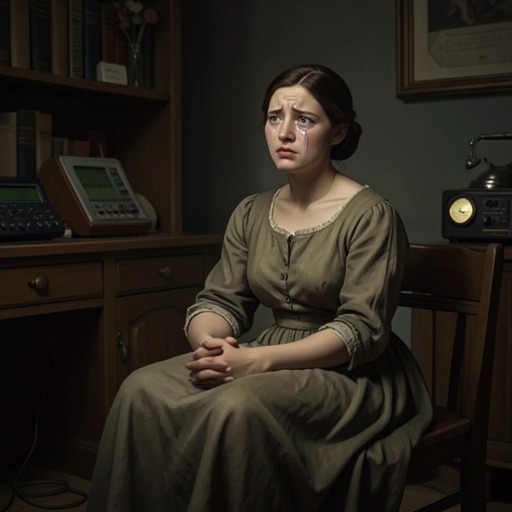
The Lying Life of AdultsAndrea and Nella’s separation is a prolonged domestic rupture rather than a single departure: Andrea vanishes for weeks, returns affectionately, and then resumes fighting with Nella, while their daughter Giovanna is caught between the instability of their marriage and the secrecy it imposes. Nearly two years pass before Nella summons him to legalize their separation; by then, the estrangement has already altered the family’s daily life and Giovanna’s sense of what her parents are capable of.
A marriage in suspended separation
For much of the crisis, Andrea and Nella remain nominally under the same roof but live together only for brief periods. Andrea disappears for weeks without warning. Giovanna fears that he has taken his own life somewhere in a dark, squalid part of Naples; only later does she learn that he has been living in a beautiful house in Posillipo, given to Costanza by her parents. Costanza, meanwhile, is now permanently fighting with Mariano, linking the parents’ separation to conflicts in the wider circle around them.
When Andrea reappears, he is affectionate and courteous, seeming to want to return to Nella and Giovanna. The attempted reconciliation lasts only a few days before the couple begin fighting about everything. Their repeated movement between absence, return, and quarrel makes the household’s apparent reunion precarious: the marriage is not yet formally ended, but ordinary family life has already broken down.
A legal end and renewed conflict
The couple take almost two years to decide to separate formally. By late winter of the following year, after a summer in which they have not seen Andrea, Nella summons him to ask that their separation be made legal. The delay places the legal decision at the end of an extended period of practical estrangement, rather than at the beginning of the conflict.
The discussions over dividing their belongings become another battleground. Andrea urgently asks for notes kept in the desk’s first drawer. Nella responds that she will prevent him from taking anything from the house—not a book, a notebook, his usual pen, or even the typewriter. Their dispute over papers and household objects makes the separation tangible: the shared home is being divided, and even ordinary tools of work become contested property.
Giovanna caught between the adults
Throughout the crisis, Andrea and Nella agree on one restriction: for Giovanna’s own good, she must not see Vittoria. Giovanna initially accepts the ban and also wants distance from her aunt, exhausted by the hatreds, desire for revenge, and language Vittoria had unloaded on her. The parents’ agreement thus persists even as their own relationship collapses, giving their daughter a rule to obey amid a home life otherwise marked by uncertainty.
The separation also leaves Giovanna carrying secrets about herself. Nella orders her not to tell anyone that she has not been promoted at school; in reality, she is repeating her first year of high school. During the summer, Giovanna avoids Angela and Ida because she fears questions about school and about her supposed second year. She increasingly finds consolation in both prayer and lies, yet resents having to fabricate a story to protect her parents from shame and to hide that she has not inherited their abilities. The marriage’s breakdown therefore coincides with her own isolation and self-concealment.
The divided city and the divided family
The separation takes place against an older estrangement between Andrea and his relatives. Giovanna has known her mother’s family, who live around Museo, far better than her father’s kin, whose homes seem to lie in an undefined lower city reached by a long descent. Her parents usually remain in the higher parts of Naples and become tense and weary when they must visit Andrea’s relatives. On the drive to that neighborhood, Andrea finally speaks of his origins: he was born and grew up there, his family was poor, and he points out the deteriorating building where he lived and where Vittoria still lives.
Vittoria later brings Giovanna to meet Andrea’s siblings and other relatives, calling the visits an encounter with her blood. Giovanna discovers that she barely remembers them, but they welcome her warmly, call her Giannina, and make her feel unusually open and relaxed. Vittoria urges her to look closely at the contrast between these relatives and her parents. Against this wider family landscape, Andrea and Nella’s separation is not only the end of a marriage: it exposes competing loyalties, inherited distances, and the question of where Giovanna belongs.